Medical Model vs Biopsychosocial Model of Disability
For this week's blog post I am going to reflect on and compare the medical model of disability to the biopsychosocial model. As well as on how to better educate people to understand that someone with a disability does not need to be "fixed." First, let me break down what the medical model of disability is, then I will discuss the problems with this model. The framework behind this model is that an individual with a disability must be treated or "fixed," which innately frames a disability as a problem (Figure 1). Now of course there is plenty of medical care and technology that can greatly improve the quality of life for someone with a disability. Although this model overlooks the larger issue of societal barriers put onto people with disabilities.

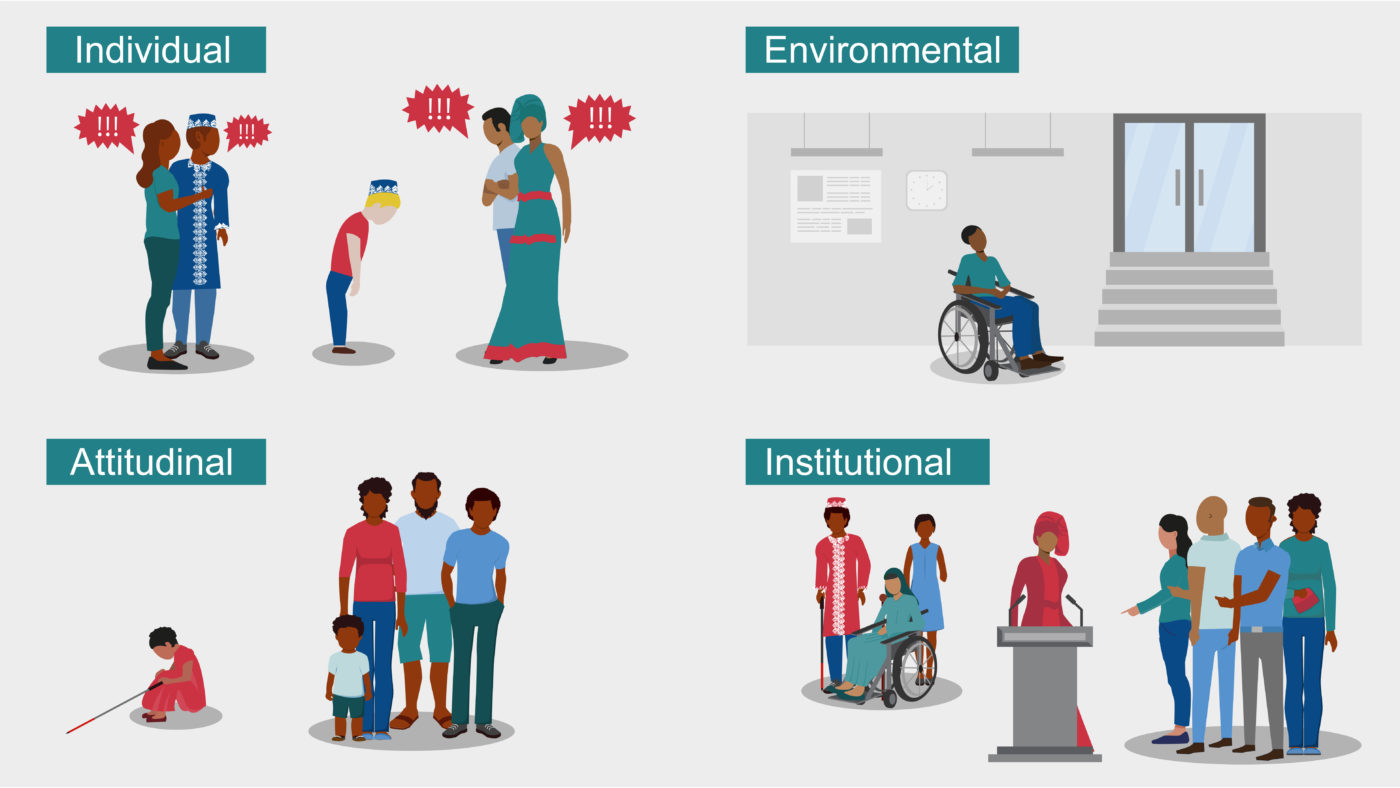
This is where the biopsychosocial model prevails with a better and more realistic understanding of disabilities in society. This model opens the door for other factors such as psychological and social environments, while not just focusing on a person's intellectual and/or physical conditions (Figure 1). Using this model, we can see that a person is not disabled due to their body or mind, but rather by their surroundings such as buildings not being up to Americans with Disabilities (ADA) standards, negative attitudes, and limited equal opportunities (Figure 2).

I think one of the best ways we can help educate others about how to treat people with disabilities better, is through daily language in conversations. For example, instead of stating that someone with a disability is "suffering" from that disability, we can use more neutral or positive terminology. Some real-world examples of this include, instead of saying "he suffers from cerebral palsy," we can say " he has cerebral palsy" or "he is a person with cerebral palsy." Another example of this for a school setting would be, instead of a someone saying, "normal students and special needs students," we should use more general/inclusive language such as "students with and without disabilities."
I believe another way we can help educate others on individuals with disabilities, is to bring more awareness to accessibility in public places. This will make people more aware of things missing all around them such as the lack of ramps into a building, braille not on signs, or videos without captions. Once people start to notice these things, they will better understand that it is not the individual with a disability's fault but the fault of their environment. Shining a light on these barriers could lead to people seeing how with thoughtful planning and inclusion, these barriers would cease to exist. Overall making a more inclusive and enjoyable environment for everyone no matter if they are disabled or not.
In conclusion, I believe the biopsychosocial model of disability is a lot more up to date with the ever-changing world. As well as I think with people taking a second longer to think about what they are saying and doing, we can all live in a unified and peaceful world. Thank you again to all my new and returning readers, make sure to come back next week for another blog post!
References
https://eisforerin.com/wp-content/uploads/2017/08/disability101socialmodel.png?w=1100&h=500&crop=1
Hardin, R., & Pate, J. R. (2024). Introduction to Adaptive Sport and Recreation. Human Kinetics Publishers. https://bookshelf.vitalsource.com/books/9781718214545
https://inclusivefutures.org/wp-content/uploads/2022/11/2211_SRHR_barriers_graphic-1400x788.jpg


Comments
Post a Comment