Special Olympics vs. Paralympics
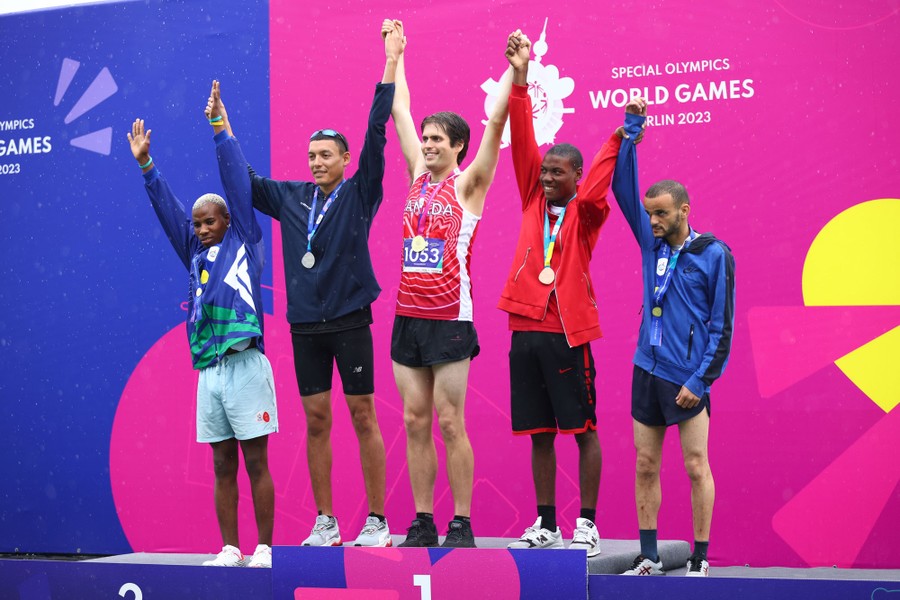
Welcome to this week's blog post, the topic for this week is my opinion on whether or not the Special Olympics should remain separate from the Paralympics. As well as whether or not I believe individuals with an intellectual disability should be allowed to participate in Paralympic events. Primarily, I believe these questions come down to fairness and overall experience for the athletes of both the Special Olympics and the Paralympics. In my opinion, I think the two organizations should remain separate from each other, mostly due to them having completely different fundamental goals.
Now of course both organizations pride themselves on ensuring fairness for all of their athletes, although it is the other ways the Paralympics is designed that differs greatly from the Special Olympics. What I mean by this is that the Paralympics is engineered to be an elite level high performance competition, where athletes train at maximum effort to meet strict competition qualifications. These qualifications shift the focus more on excellence, achieving records, as well as the athlete representing the country they are from. While on the other hand, the Special Olympics puts more focus on participation, inclusion, and personal growth for individuals with intellectual disabilities. Mixing these focuses would be extremely difficult and would most likely lead to hurting the overall experience for both Paralympic and Special Olympic athletes.

Another important aspect to consider on why they should remain separate is the contrasting environments. As mentioned earlier, the Paralympics puts focus on winning and/or achieving new records through brutal competition at the highest level of sport. This environment leaves very little room for error among athletes in the Paralympics. While the Special Olympics leans more on the side of encouragement, celebrating effort more than achieving records, and community among athletes. This environment is much more light-hearted and less stressful for the athletes participating.

Furthermore, I do not think it would be a promising idea for individuals with intellectual disabilities to participate in these harsh levels of competition. Intellectual disabilities could affect things like decision-making, reaction times, and learning new skills quickly. These effects could lead to the athlete getting left behind in the competition, which could lead to serious confidence and personal growth issues. In addition, the Paralympics already has a complex classification system, adding more variation among athletes to the system could cause holes of unfairness in the competition.
In conclusion, I believe the best course of action to leave these two organizations separate from each other. This way the Paralympics can keep their way of elite level competition, while the Special Olympics can remain a safe space for friendly competition, personal growth, and community building. Lastly, I think both of these organizations are amazing in their own ways and that is exactly why in my opinion they should remain separate.
References
Hardin, R., & Pate, J. R. (2024). Introduction to Adaptive Sport and Recreation. Human Kinetics Publishers. https://bookshelf.vitalsource.com/books/9781718214545
https://tse4.mm.bing.net/th/id/OIP.kGbrHVnlqGQ80reMkDFFawHaDX?rs=1&pid=ImgDetMain&o=7&rm=3


Comments
Post a Comment